Tuesday, May 21, 2013

RES IPSA LOQUITUR


Ronald Searle

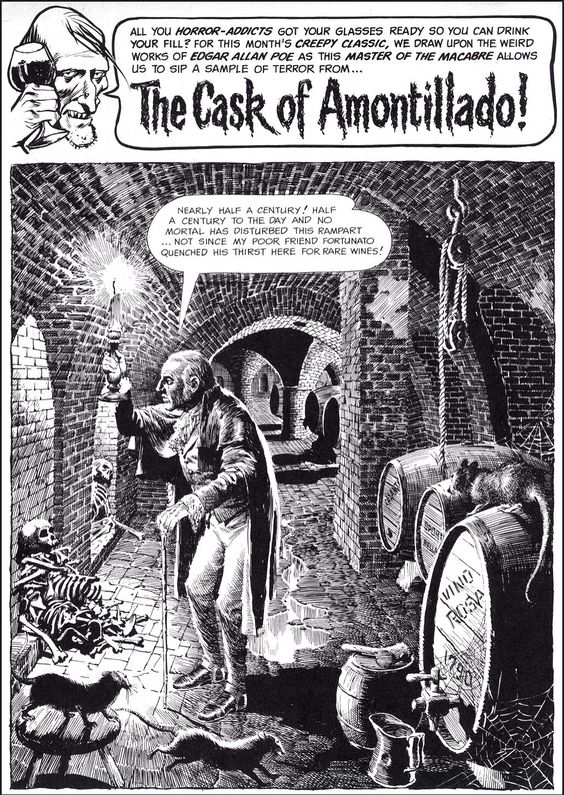
Oil mogul Armand Hammer amassed a large collection of paintings by famous artists.  He then decided to build a $70 million museum to house his collection. The Armand Hammer Museum would be a grand monument to Hammer and his taste.  Some were startled to learn that despite his personal fortune of hundreds of millions of dollars, Hammer expected the shareholders of the  Occidental Petroleum Company to pay for his museum.  But when shareholders sued to block Hammer from using company funds, they were even more startled to discover that he had already spent millions of dollars of shareholder money to buy art for his personal collection.  Those millions of dollars were taken from the retirement funds of teachers, waiters and shop clerks to buy more art for Hammer.

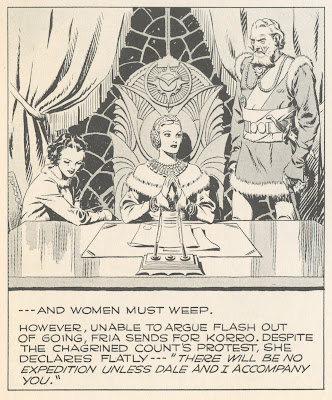
C. F. Payne
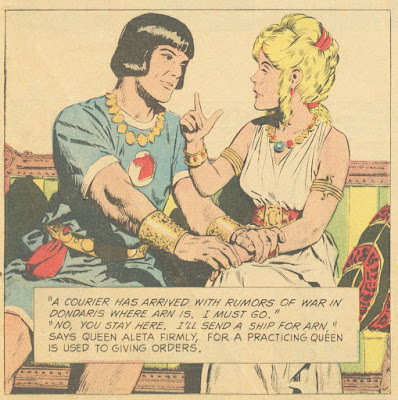
Sullivant

Dennis Kozlowski, the former CEO of Tyco International, acquired a personal fortune of approximately $600 million.  Before he was convicted for plundering money from his company, he set out to acquire a major art collection (Monet, Renoir, etc.) with the assistance of a Palm beach art consultant.  Kozlowski apparently became a fan of Michelangelo in the process because he commissioned an ice sculpture of Michelangelo's David that urinated Stolichnaya vodka into the crystal glasses of guests who he flew to his wife's $2 million birthday party on the island of Sardinia.  During Kozlowski's last major art purchase, he falsified the paperwork to avoid paying tax on $14 million worth of art, and ended up being indicted for tax evasion.

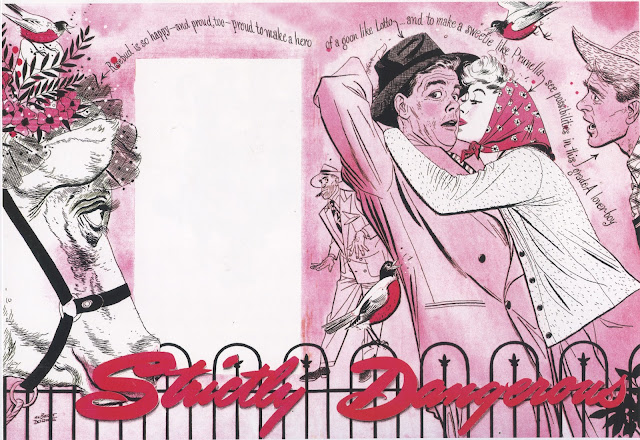
Ronald Searle
Robert Fawcett
 Richard Fuld, former CEO of the investment firm Lehman Brothers, led his company into the treacherous subprime loan market.  They made billions by scooping up toxic debt and passing it off on clueless investors who trusted Lehman. This played a major role in triggering the recent global financial meltdown and wrecking countless lives. Fuld himself pocketed half a billion dollars before Lehman Brothers finally went bankrupt. Why did Fuld need that much money so badly?  What made it all worthwhile?  For one thing, Fuld was able to acquire a major art collection worth tens of millions of dollars, including works by abstract expressionists such as de Kooning.  Bonus: his wife got to sit on the board of the Museum of Modern Art.

Garth Williams

A recent report on the intrinsic benefits of the arts found that the arts are responsible for
growth in individual capacities—such as enhanced empathy for other people and cultures, powers of observation, and understanding of the world—that can occur through cumulative arts experiences.  These intrinsic effects enrich individual lives, but they also have a public spillover component in that they cultivate the kinds of citizens desired in a pluralistic society.

Wednesday, May 15, 2013

ENVELOPE ART (HIGH AND LOW)

The Museum of Modern Art in NY is currently exhibiting a collection of envelopes which constitute a work of art by Alighiero Boetti,  perhaps the most prominent Italian conceptual artist of the 20th century. Wikipedia describes this important piece:
Dossier Postale (1969–70) consists of a series of letters which were sent to 26 well-known recipients, primarily artists, art critics, dealers, and collectors active at the time. Boetti sent the envelopes to imaginary addresses, thus each letter was returned to the artist undelivered, demonstrating Boetti’s preoccupation with improbability and chance.
The envelopes, complete with colored stamps and stray markings from the postal service, make an interesting assortment of lines and colors:


Marcel Duchamp had been dead for a year when Boetti mailed him this letter

Talented illustrator Bill Mayer also has a marvelous collection of decorated envelopes.  He has not, to my knowledge, exhibited them at the Museum of Modern Art, but you can see them on line.


It turns out that Mayer decorated nearly 100 envelopes containing letters to his wife, Lee.  I am a big fan of Mayer's work, and I really enjoy these envelopes.


If we compare Mayer's envelopes to Boetti's on a level playing field,  I find Mayer's visually stronger. 


Nevertheless, there are two important differences that qualify Boetti's envelopes for an honored place as "fine art" at MOMA:

  1. Mayer's images are an act of genuine communication with another human being, while Boetti's onanistic epistles are never meant to be received or read.  They have fake addresses designed to return Boetti's letters to him, as part of an intellectual game he plays with himself.
  2.  Mayer's images are a purposeful act of skill, while Boetti relies instead on random marks by anonymous postal service employees to create his images, almost as if the postal bureaucracy is an extension of his brush.
Wikipedia asserts that Boetti's envelopes illuminate the concepts of "improbability and chance." I enjoy his envelopes, although I'd be hard pressed to find any insights on improbability and chance beyond basic platitudes.  On the other hand, if MOMA ever develops an interest in concepts such as love, playfulness, enthusiasm and imagination, perhaps they'll knock on Mayer's door. 


Friday, April 26, 2013

ECSTASY UPDATED

Skeptics have long questioned whether Bernini's great sculpture, The Ecstasy of St. Teresa, is about a purely religious experience:

Teresa of Avila (1515-1582) wrote of her dream that an angel thrust his fiery golden spear into her "to pierce my very entrails." When he finally withdrew after much thrusting, her heart was attached. The experience, she reported, was "not bodily, but spiritual."

Bernini's sculpture was commissioned by the Catholic church for the Cornaro Chapel in Rome.  Regardless of Bernini's motives, it certainly attracted the crowds.  For centuries, devout housewives  sat in the church thinking, "I'll have what she's having."


350 years after Bernini, Popes and kings no longer buy art.  They have been replaced by a new commercial class of patrons, fueled by the birth of capitalism and the ascendancy of the modern corporation.  But some things never change.  Whether church or refrigerator manufacturer, they still commission artists to sell their products with promises of ecstasy.

The great illustrator John Gannam had a gift for portraying women ecstatic over a gift of new blankets or sheets


Gannam's series of watercolors for Pacific Sheets was legendary.

.


Albert Dorne's illustrations lacked Gannam's poetry, but Dorne too tried to illustrate women experiencing the highest form of satisfaction from a product: 


And of course, hundred of anonymous illustrators have depicted women over the years in a state of delirium over new refrigerators, cars, jewelry or laundry detergent.  The formula is the same as Bernini's-- head tilted back, lips parted, toes curled, eyes rolling -- it's just in the service of a different sponsor.


These latter day corybants seem to be in paroxysms before the unholy shrine of Wurlitzer:


As Paul was awestruck by a flash of heavenly light on the road to Damascus, so this gentlemen seems awestruck-- his mouth agape and his eyes bulging-- at the glow from the juke box:


A lot of things have changed in the field of illustration over the centuries, but some things remain immutable.  No matter who the client or what the product, an illustrator who can harness ecstasy in the service of a client will always find work.

Sunday, April 14, 2013

ONE LOVELY DRAWING, part 43


 Here is a drawing with attitude:


This working drawing by Adolph Menzel (1815 - 1905) is an astonishing ballet of hand and eye.  Look at the speed and clarity with which he captures the most telling details of a military coat:

Sharp realism combined with abstract design

These long, sweeping lines show Menzel's confidence:


But mostly I like Menzel's attitude toward this drawing.  Rather than place it on a shelf to be admired, he marks it up with notes as if he were a master carpenter plying his trade.  The notes are part of the artistry of the sketch:


Contrast Menzel's empty coat with this far more famous empty robe series by pop artist Jim Dine:


Dine's "fine art" pictures of empty robes are treated with reverence and sell at auction for over $100,000.  But I have no doubt that Menzel's working sketch is the superior work of art.


Saturday, April 06, 2013

T.S. SULLIVANT

The great T.S. Sullivant (1854–1926) was hilarious from any angle.


For most artists it would be a challenge to draw a recognizable head from this odd angle:


Sullivant goes much further, fearlessly distorting the head with a comical hodge podge of bizarre shapes.  Yet, it is still persuasive.

And look at the liberties Sullivant takes with this sleeping pig, or the unorthodox perspective on the chicken's butt in the air:


In this next drawing, Sullivant doesn't need to show a face; he gives us all the information we need with that wild beard and stooped posture:

Here, we see an elephant who has inadvertently hurt the feelings of the giraffe:


This could be my very favorite drawing of a crying giraffe:


And here we see Sullivant's wicked cave boys tormenting some poor dinosaur:


We can see from the original how Sullivant shaped the dinosaur as he went along, scratching out some of the lines of the head to achieve the structure he wanted:


A stumbling, upside down dinosaur, mid-air and foreshortened-- now that's doing it the hard way!


Saturday, March 30, 2013

WARRING WITH TROLLS, part 3

"To live is to war with trolls." --Ibsen 

While researching the upcoming book on illustrator Bernie Fuchs, I was amused by the imitators who seemed to encircle his ankles wherever he went.

Fuchs' illustration for Cointreau...
 

... was copied by illustrators as far away as Korea:

I love how this imitator re-purposed Fuchs' line for the woman's hair into a dotted coupon line.
The thefts became so blatant that Advertising Age magazine sponsored a competition challenging readers to send in ads that copied the Cointreau ad.  Fuchs never did anything about it, just moved on to a different approach.

He got a lot of attention with this bold new illustration for McCalls in 1964: 


Among the artists "influenced" by Fuchs' picture was Aldo Luongo, who painted the following version and sold it as a limited edition print,  advertised heavily in fine art magazines:


When Fuchs changed directions, painting with a series of thin acrylic washes...

Fuchs

...illustrations by others in the same style began popping up a few months later:

Andy Virgil

I suspect the imitators who hurt the most were the capable illustrators who did not copy a specific image but just adopted the Fuchs "look."  They were the hardest to distinguish.  More than anyone else, these images diluted the the Fuchs "brand."  But he just kept changing the brand.

When Fuchs began painting bright yellow floors... 
...bright yellow became the flavor of the month for imitators such as this anonymous artist. 

Fuchs' agent used to become angry when friends called to compliment him on a new Fuchs illustration that turned out to be by someone else.

But when I interviewed Fuchs before he died, he never mentioned it.  One way to war with trolls is not to notice them.